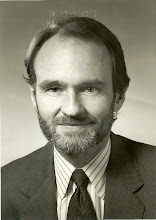
Geithner jumped the gun. It was a huge mistake. The financial stability "Plan"? Geithner is apparently not acquainted with the dictionary. Webster: plan - to devise procedures for achieving a given objective.
From Larry Kudlow: "Geithner would have been better off not giving a speech until he could put real meat on the bones. What he pulled Tuesday was a classic rookie move that will further erode the public’s trust in his capabilities. Following the controversy over his late payment of taxes, this bank-plan blunder could be another nail in his coffin."
We have provided a background on the "stimulus" package, along with our own REAL stimulus package. We have yet to receive the call that is was accepted. OK. So we waited this am for something of substance from the administration re the bank plan, a plan which is far more key for the near-term health of our economy than any stimulus anyway.
All the market wanted to know today is how the administration will be able to help banks with their so-called toxic assets (the result of the complicity between an accommodating wall st and the left’s refusal to reform F/F mortgage creation - ground zero) while not having taxpayers get ripped off in the process. Instead, Geithner failed 1) to say how much $ will be on offer to invest in the banks themselves and on what terms, and 2) how and on what terms a public-private "bad bank" will work and how it will price these toxic assets it intends to buy.
"Details": This bad bank will be seeded with Treasury capital but largely funded by private equity or hedge funds. Geithner spoke vaguely about what amounts to a public/private investment fund that will use OUR MONEY and provide financing for private investors, who are then supposed to buy toxic assets. These investors then would have to figure out the right value. If they are right, they could get all of the upside. They would also take some (we don’t know how much) of the downside.
As another part of the deal Geithner did note that the Fed’s facility to buy collateralized consumer loans will be expanded. That is a good thing for consumers.
Finally, there was little re the mortgage market aside from a promise of a detailed plan later.
A real problem for us is that the presentation was laced with partisan politics and a misguided ideology to boot. How can any of us respect this individual? He started out by attacking supply siders and the Bush tax cuts, adding that these have only added to our problem, "..only helped lead us to the crisis we face right now." Blaming the Bush tax cuts for the crisis is false, it is a partisan construct and a lie. Naturally our pals from the left, reciting the party line pretend to abhor tax cuts, relying less on scholarship than sound bites fed to them by the DNC. They may not recall, or pretend not to recall the super successful Kennedy-Johnson tax cuts of the 60's nor the successful Reagan tax cuts of the 80s. But Geithner knows better.
Robert Craven
Tuesday, February 10, 2009
Tuesday, February 3, 2009
The Stimulus Plan - A Background
We have three theaters to monitor: 1) The Fed, 2) the Bank Rescue plan and 3) the Stimulus plan. The Fed runs the only game in town, for now (see earlier sketch). Nothing else is working. The administration’s Rescue plan is to be fleshed out in 10 days or so, armed with roughly half of the original $700 bln. We will follow that over the near term. Below is a guide to the Stimulus plan, taken up by the Senate this week.
There is ample evidence that tax cuts spark economic activity; there is very little that gov’t spending can do the same. Roosevelt’s programs did next to nothing to fetch the economy from the Great Depression. WWII did the trick. Some observers maintain that the government can increase its spending only by reducing private spending equivalently. From Rich Wagner at George Mason Univ, "Whether government finances its added spending by increasing taxes, by borrowing, or by inflating the currency, the added spending will be offset by reduced private spending. Furthermore, private spending is generally more efficient than the government spending that would replace it because people act more carefully when they spend their own money than when they spend other people's money."
Wagner may be correct but this is lost on Congress. Tax cuts amount to only one third (1/3) of the package ($500 credit for individuals/$1000 for couples). The balance is direct gov’t spending, or transfers. The CBO and the Joint Committee on Taxation have calculated that only $170 billion, or about one-fifth of the $816 billion package will be spent in fiscal 2009. An additional $356 billion will be spent in 2010. That leaves $290 billion to be spent when even the most pessimistic forecasters think the economy will be in recovery mode. Some of the longer-term investment projects proposed may be quite worthy; some are not. Either way, they are not stimulus. What the House Democrats have done is write down every single item on their wish list, append dollar amounts next to the items seemingly at random, and call it "stimulus." Nancy Pelosi was on TV recently justifying the "stimulus." "How," asks the reporter from CBS, "does $335 million in STD prevention stimulate the economy?"
Stimulus has to stimulate, right? Yet consider education. Of the $140 billion spending on education, some may move rather quickly, say the $13 billion over two years for Title I schools and for special education under the Individuals With Disabilities Education Act. Maybe. But also included are programs that even under the most optimistic timetable will take longer to complete, like $20 billion for school renovations. These would provide ZERO near-term help for the economy. Similar scrutiny could be trained on health care and especially on alternative energy programs. A large chunk of health care spending would not start until 2012 or later.
How may Congress best provide the spark? Well, try cutting the U.S. corporate tax rate -- at 35%, among the highest of all industrialized nations -- in half. Suspend the capital gains tax for a year to provide the incentive for new investment. Any fool knows this would work. Postponing the scheduled increase in the tax on dividends and capital gains would raise share prices, leading to increased consumer spending and, by lowering the cost of capital, more business investment.
Or, if Congress insists on spending, make it rapid, and, on something that needs to be done. How about including higher defense outlays, including replacing and repairing supplies and equipment, needed after five years of fighting? The military can increase its level of procurement very rapidly. Yet the proposed spending plan includes less than $5 billion for defense, only about one-half of 1 percent of the total package.
Robert Craven
There is ample evidence that tax cuts spark economic activity; there is very little that gov’t spending can do the same. Roosevelt’s programs did next to nothing to fetch the economy from the Great Depression. WWII did the trick. Some observers maintain that the government can increase its spending only by reducing private spending equivalently. From Rich Wagner at George Mason Univ, "Whether government finances its added spending by increasing taxes, by borrowing, or by inflating the currency, the added spending will be offset by reduced private spending. Furthermore, private spending is generally more efficient than the government spending that would replace it because people act more carefully when they spend their own money than when they spend other people's money."
Wagner may be correct but this is lost on Congress. Tax cuts amount to only one third (1/3) of the package ($500 credit for individuals/$1000 for couples). The balance is direct gov’t spending, or transfers. The CBO and the Joint Committee on Taxation have calculated that only $170 billion, or about one-fifth of the $816 billion package will be spent in fiscal 2009. An additional $356 billion will be spent in 2010. That leaves $290 billion to be spent when even the most pessimistic forecasters think the economy will be in recovery mode. Some of the longer-term investment projects proposed may be quite worthy; some are not. Either way, they are not stimulus. What the House Democrats have done is write down every single item on their wish list, append dollar amounts next to the items seemingly at random, and call it "stimulus." Nancy Pelosi was on TV recently justifying the "stimulus." "How," asks the reporter from CBS, "does $335 million in STD prevention stimulate the economy?"
Stimulus has to stimulate, right? Yet consider education. Of the $140 billion spending on education, some may move rather quickly, say the $13 billion over two years for Title I schools and for special education under the Individuals With Disabilities Education Act. Maybe. But also included are programs that even under the most optimistic timetable will take longer to complete, like $20 billion for school renovations. These would provide ZERO near-term help for the economy. Similar scrutiny could be trained on health care and especially on alternative energy programs. A large chunk of health care spending would not start until 2012 or later.
How may Congress best provide the spark? Well, try cutting the U.S. corporate tax rate -- at 35%, among the highest of all industrialized nations -- in half. Suspend the capital gains tax for a year to provide the incentive for new investment. Any fool knows this would work. Postponing the scheduled increase in the tax on dividends and capital gains would raise share prices, leading to increased consumer spending and, by lowering the cost of capital, more business investment.
Or, if Congress insists on spending, make it rapid, and, on something that needs to be done. How about including higher defense outlays, including replacing and repairing supplies and equipment, needed after five years of fighting? The military can increase its level of procurement very rapidly. Yet the proposed spending plan includes less than $5 billion for defense, only about one-half of 1 percent of the total package.
Robert Craven
Thursday, January 15, 2009
We Are Left With The Fed
The new administration’s rescue plan(s) will impact over the longer term, if at all. There will be no near term impact, zero, notwithstanding the mix. We are left with the Fed.
Few of us specialize in central banking. Yet central banks - Fed if American, Bk of Eng if Brit, ECB if European - hold the key to the West’s economic well being. Fed policy now impacts all of us Americans directly, sometimes immediately. Thus, hadn’t we better get a grip? Who are these guys and what are they up to?
We are told that the Fed’s target is near zero. What in the world does this mean? From soph year, Eco & Bkg 101 recall that banks are required to hold a certain % of reserves against loans. Day to day some are flush, some are short. Those that are flush lend o/n to those that are short. The rate they charge is called the Fed Funds rate. This is also the Fed’s target. Here is why. Reserves and currency are base money - the heart of the system. The Fed figures that by manipulating, fine tuning the amount of reserves available it can fan or retard the economic flames. Very true, usually. The FF’s rate simply indicates tension. The Fed can increase or decrease the supply of "non-borrowed" reserves through so-called "open-market operations". No big deal here. It means that the NY desk injects reserves by buying U S securities, usually on a temporary basis, or repo, agreeing to reverse the transaction in a few days. It does the reverse to shrink reserves. In the orchestration it is far more complex; fine, we don’t care as long as we have the thrust of it.
So now, with the FF’s target at near zero banks can fetch all the reserves they want (with which to make loans) at practically nothing. But they’re not. Why? It’s not just that they’re risk adverse - wimps really, but that is for another sketch. It’s that many of their assets are near garbage and even they don’t know what they’re worth, yet. They’d rather see to that first, as soon as they can get a grip, poor things.
Back to the Fed. So orthodox policy is not working. What is next is what Bernanke calls "quantitative easing" or the Bk of Eng "the nuclear option". It’s not nuclear or new, just rarely used. No one at the Fed has much experience with it; yet the Fed as it turns out can buy anything they want, outright (not temporary, not a repo) - a herd of long horn steers / the NY Giants. All the Fed needs is emergency powers and those exist under Article 13 (3) of the code. Where does the Fed get the $? Out of thin air. For a non-special forces approach, assume the U S gov’t cuts taxes, financed by bond issuance. The Fed can buy this US debt outright. The Fed’s balance sheet expands, the $ goes to US citizens.
But the Fed is now working out of its comfort zone, more of a Delta Force approach. Bernanke says he can "expand the menu of assets he buys". Sure enough, the Fed is already fast at it. Have a credit card? Haven’t received a notice that your limit has been reduced? Likely because the Fed is already buying securities collateralized by credit card receivables. Have a mortgage? Terms are easier? Same answer. You’re a corporation with a good credit but can’t sell your commercial paper (short-term IOU’s) anymore? Call the Fed. For three months they have been buying this stuff.
Back to Eco 101. Isn’t this inflationary? Guess not. All observers see are signs of deflation. There is no fear on the part of central bank officials at the moment. They’ll reverse policy at the appropriate time. Maybe.
Robert Craven
Few of us specialize in central banking. Yet central banks - Fed if American, Bk of Eng if Brit, ECB if European - hold the key to the West’s economic well being. Fed policy now impacts all of us Americans directly, sometimes immediately. Thus, hadn’t we better get a grip? Who are these guys and what are they up to?
We are told that the Fed’s target is near zero. What in the world does this mean? From soph year, Eco & Bkg 101 recall that banks are required to hold a certain % of reserves against loans. Day to day some are flush, some are short. Those that are flush lend o/n to those that are short. The rate they charge is called the Fed Funds rate. This is also the Fed’s target. Here is why. Reserves and currency are base money - the heart of the system. The Fed figures that by manipulating, fine tuning the amount of reserves available it can fan or retard the economic flames. Very true, usually. The FF’s rate simply indicates tension. The Fed can increase or decrease the supply of "non-borrowed" reserves through so-called "open-market operations". No big deal here. It means that the NY desk injects reserves by buying U S securities, usually on a temporary basis, or repo, agreeing to reverse the transaction in a few days. It does the reverse to shrink reserves. In the orchestration it is far more complex; fine, we don’t care as long as we have the thrust of it.
So now, with the FF’s target at near zero banks can fetch all the reserves they want (with which to make loans) at practically nothing. But they’re not. Why? It’s not just that they’re risk adverse - wimps really, but that is for another sketch. It’s that many of their assets are near garbage and even they don’t know what they’re worth, yet. They’d rather see to that first, as soon as they can get a grip, poor things.
Back to the Fed. So orthodox policy is not working. What is next is what Bernanke calls "quantitative easing" or the Bk of Eng "the nuclear option". It’s not nuclear or new, just rarely used. No one at the Fed has much experience with it; yet the Fed as it turns out can buy anything they want, outright (not temporary, not a repo) - a herd of long horn steers / the NY Giants. All the Fed needs is emergency powers and those exist under Article 13 (3) of the code. Where does the Fed get the $? Out of thin air. For a non-special forces approach, assume the U S gov’t cuts taxes, financed by bond issuance. The Fed can buy this US debt outright. The Fed’s balance sheet expands, the $ goes to US citizens.
But the Fed is now working out of its comfort zone, more of a Delta Force approach. Bernanke says he can "expand the menu of assets he buys". Sure enough, the Fed is already fast at it. Have a credit card? Haven’t received a notice that your limit has been reduced? Likely because the Fed is already buying securities collateralized by credit card receivables. Have a mortgage? Terms are easier? Same answer. You’re a corporation with a good credit but can’t sell your commercial paper (short-term IOU’s) anymore? Call the Fed. For three months they have been buying this stuff.
Back to Eco 101. Isn’t this inflationary? Guess not. All observers see are signs of deflation. There is no fear on the part of central bank officials at the moment. They’ll reverse policy at the appropriate time. Maybe.
Robert Craven
Sunday, December 7, 2008
No Yawning Please
Got an audience? Want to put them to sleep? Talk of interest rates will do the trick every time. This is a tad ironic as this topic impacts all of us personally.
World markets trade bonds just like anything else. There is a key relationship between price and interest rate. Let’s start there.
Assume that company A wishes to borrow and issues an IOU, a bond ($1000 minimum denomination). Assume lenders require A to pay a 6% coupon for that loan, or $60/yr, say for 10 years. Now assume over the next 12 months economic conditions slow so that when B, an identical credit to A needs to borrow, B needs only to offer 5% to acquire the funds. But assume you are a holder of bond A and wish to sell after one year. Will you ask only $1000, face value? Naturally not as the interest rate associated with similar credits to A is now 5%. Instead you will price your bond at $1200, making the attached coupon of 6% worth 5%, or the market rate. Nice little profit.
Instead of general conditions, there may be some extraneous factor(s) which make A’s bonds attractive - say a cure for cancer. Thus investors will drive A’s bond price up steeply and quickly even though the general interest rate environment has not changed.
Thus, interest rates down, prices up. Or, interest rates up, prices down. That’s all there is to it.
Conditions of individual bond pricing are far more complex but it is only necessary for most of us to understand this simple relationship or axiom to acquire a long leg over most laymen.
Now let us look at the current situation, at the US instead of company A as a borrower. Given the latest world financial turmoil large investors (China, Saudis, St of Cal pension, college endowment funds, etc) seek shelter. The safest place to shelter one’s funds is in short-term US treasuries. This tremendous demand, something we call "flight-to-quality" (could be a cure for cancer) has driven treasury prices through the roof. And so we know that yields must correspondingly take a nose dive. They have. The yield on 90 day treasury bills is 0.02% for goodness sake. So in a bit of a twist the US is paying next to nothing to finance the billions in rescue packages orchestrated in Washington.
Robert Craven
World markets trade bonds just like anything else. There is a key relationship between price and interest rate. Let’s start there.
Assume that company A wishes to borrow and issues an IOU, a bond ($1000 minimum denomination). Assume lenders require A to pay a 6% coupon for that loan, or $60/yr, say for 10 years. Now assume over the next 12 months economic conditions slow so that when B, an identical credit to A needs to borrow, B needs only to offer 5% to acquire the funds. But assume you are a holder of bond A and wish to sell after one year. Will you ask only $1000, face value? Naturally not as the interest rate associated with similar credits to A is now 5%. Instead you will price your bond at $1200, making the attached coupon of 6% worth 5%, or the market rate. Nice little profit.
Instead of general conditions, there may be some extraneous factor(s) which make A’s bonds attractive - say a cure for cancer. Thus investors will drive A’s bond price up steeply and quickly even though the general interest rate environment has not changed.
Thus, interest rates down, prices up. Or, interest rates up, prices down. That’s all there is to it.
Conditions of individual bond pricing are far more complex but it is only necessary for most of us to understand this simple relationship or axiom to acquire a long leg over most laymen.
Now let us look at the current situation, at the US instead of company A as a borrower. Given the latest world financial turmoil large investors (China, Saudis, St of Cal pension, college endowment funds, etc) seek shelter. The safest place to shelter one’s funds is in short-term US treasuries. This tremendous demand, something we call "flight-to-quality" (could be a cure for cancer) has driven treasury prices through the roof. And so we know that yields must correspondingly take a nose dive. They have. The yield on 90 day treasury bills is 0.02% for goodness sake. So in a bit of a twist the US is paying next to nothing to finance the billions in rescue packages orchestrated in Washington.
Robert Craven
Thursday, November 27, 2008
Banks - Useless At Best
Policy initiatives in place have eased the credit crisis. As Fed Governor Kevin Warsh pointed out last week: "We have had a forceful response from monetary, fiscal and financial policymakers. There are some notable signs of improvement. Short-term funding spreads are retreating from extremely elevated levels. Funding maturities are being extended beyond the very near term. Money market funds and commercial paper markets are showing signs of stabilization. And credit default swap spread of banking institutions are narrowing significantly."
Translation - the liquidity crisis, inter-bank, is over. Fine. Great. What’s it mean for us? Next to nothing. Banks won’t lend. Banks are essential but they refuse to act. As Willem Buiter puts it, "After years of excess and anything goes, the bean counters and risk controllers now rule supreme in the banking world. There is little upside to lending and taking a risk, but a lot of downside. Rolling over an old loan or extending a new one won’t help your bonus and it may cost you your job."
This is critical folks. Unless the banks start lending in normal volumes very soon, this recession could indeed become another great depression. We did not label our sketch of Oct/9 - "1929?", on a whim.
It’s not just US banks. In the UK, legal curbs may be imposed on banks if they fail to abide by a new code of practice on lending. They will also be compelled to open their books to the government so that their lending can be monitored. Whoa! But good businesses and consumers are starved of credit so why not. "I am in no doubt that the single most pressing challenge to domestic economic policy is to get the banking system to begin lending in any normal sense. That is more important than anything else at present," Bk of Eng gov Mervyn King said this week. King (the very best of all central bank gov’s, our view) also held the threat of wholesale nationalization over these banking clowns!
From Buiter, "We have no longer just a crisis in the financial system. We have gone even beyond the stage where there is a crisis of the financial system."
Getting banks to lend again is even more essential than establishing primary and secondary markets for garbage assets. In the US as elsewhere, small and medium enterprises rely overwhelmingly on banks for external finance. We all know that. Without access to bank loans, credit lines and overdraft facilities, countless small and intermediate sized businesses that would be perfectly viable with a functional financial and banking system, that are great credits, are threatened with bankruptcy. They’re innocent for goodness sake!!
What is to be done? 1) The US may have to set aggregate lending targets to the domestic non-financial business sector for each bank (last year’s total plus 7 percent, say). The banks themselves can decide who to lend to and on what terms. Any shortfall of actual lending from the target is translated dollar for dollar into some kind of tax. Since not meeting the target amounts to throwing money away, the banks will probably lend. Or, 2) nationalize those that don’t (paying as little as possible to the existing shareholders), fire the existing management and board of directors, and have the government appoint a new executive and a new board that are serious about meeting lending targets.
This is nonsense.
Robert Craven
Translation - the liquidity crisis, inter-bank, is over. Fine. Great. What’s it mean for us? Next to nothing. Banks won’t lend. Banks are essential but they refuse to act. As Willem Buiter puts it, "After years of excess and anything goes, the bean counters and risk controllers now rule supreme in the banking world. There is little upside to lending and taking a risk, but a lot of downside. Rolling over an old loan or extending a new one won’t help your bonus and it may cost you your job."
This is critical folks. Unless the banks start lending in normal volumes very soon, this recession could indeed become another great depression. We did not label our sketch of Oct/9 - "1929?", on a whim.
It’s not just US banks. In the UK, legal curbs may be imposed on banks if they fail to abide by a new code of practice on lending. They will also be compelled to open their books to the government so that their lending can be monitored. Whoa! But good businesses and consumers are starved of credit so why not. "I am in no doubt that the single most pressing challenge to domestic economic policy is to get the banking system to begin lending in any normal sense. That is more important than anything else at present," Bk of Eng gov Mervyn King said this week. King (the very best of all central bank gov’s, our view) also held the threat of wholesale nationalization over these banking clowns!
From Buiter, "We have no longer just a crisis in the financial system. We have gone even beyond the stage where there is a crisis of the financial system."
Getting banks to lend again is even more essential than establishing primary and secondary markets for garbage assets. In the US as elsewhere, small and medium enterprises rely overwhelmingly on banks for external finance. We all know that. Without access to bank loans, credit lines and overdraft facilities, countless small and intermediate sized businesses that would be perfectly viable with a functional financial and banking system, that are great credits, are threatened with bankruptcy. They’re innocent for goodness sake!!
What is to be done? 1) The US may have to set aggregate lending targets to the domestic non-financial business sector for each bank (last year’s total plus 7 percent, say). The banks themselves can decide who to lend to and on what terms. Any shortfall of actual lending from the target is translated dollar for dollar into some kind of tax. Since not meeting the target amounts to throwing money away, the banks will probably lend. Or, 2) nationalize those that don’t (paying as little as possible to the existing shareholders), fire the existing management and board of directors, and have the government appoint a new executive and a new board that are serious about meeting lending targets.
This is nonsense.
Robert Craven
Tuesday, November 18, 2008
Detroit - Drop Dead
We all have witnessed the begging; it continues today before the Senate Banking Comm.. Yesterday GM took this behavior offshore, pleading for a billion-euro credit guarantee from the German government to help its Opel subsidiary. Too much.
And, we all know the story: All three vehicle companies were heavily into producing trucks and SUV's when the sharp run up in gas prices induced consumers to shift to smaller and more fuel-efficient cars. Yet the huge cost resulting from the big three’s obsequious, compliant response to UAW demands made it impossible for the companies to sell for a profit ANYTHING BUT the big cars and SUVs that, after gas prices hit $4 a gallon last spring, almost no one wanted to buy.
The only money GM for example made recently came not from car production but from its automobile credit business - GMAC. The financial crisis has dried up the money available to auto financing companies and hence eliminated the major source of their income.
From Gary Becker, Univ of Chicago econ prof and ‘92 Nobel recipient: "The main problem with American auto companies is that during the good times of the 1970s, 1980s and 1990s, they made overly generous settlements with the United Auto workers (UAW) on wages, pensions, and health benefits. Only a couple of years ago, GM was paying $5 billion per year in health benefits to retirees and current employees because their plans had wide health coverage with minimal co-payments and deductibility on health claims by present and retired employees." They caved to the UAW parasites because they could pass the cost right on to us. Now they’re broke and want $25 bln more than the $25 bln loan negotiated in September.
"Keeping the Detroit Three in their present form, with their extravagant health care benefits and the union's 5,000 pages of work rules, is an exercise in preserving in amber the America of the past," Mike Barone explains. It is not that cars cannot be produced profitably with American workers for goodness sake: the American plants of Toyota and other Japanese companies, and of German auto manufacturers, have been profitable for many years. The foreign companies have achieved this mainly by setting up their factories in Southern and border states where they could avoid the UAW and thereby introduce efficient methods of production. Their workers have been paid well but not excessively, and these companies have kept their pension and health obligations under control while still maintaining good morale among their employees.
Will taxpayers allow Pelosi, Obama and the rest to reward the UAW for its political support and permanently damage America’s economy in doing so? Will politics trump sound economics? Let us hope not. As we argued earlier, allowing GM to go bankrupt would enable the courts to order changes in the company's onerous labor and supplier contracts. Meanwhile, just as the airlines continued to fly while in bankruptcy, GM could continue to produce such cars as it might be able to sell. But the status quo clearly won’t work, and, every literate American knows it. A study by the Center for Automotive Research found that UAW compensation is 68 percent higher than the average for the U.S. manufacturing sector. And some 40 million American taxpayers who do not have health insurance, some because they can't afford it are not pleased at the prospect of watching their tax dollars finance the lavish health-care plan that the UAW extracted from a compliant General Motors in the good old days.
Finally, recall that the big three make fewer than half the new vehicles sold in the United States. If one or two were to fail the big foreign makers are established enough, many experts say, to take control of the industry and its supplier network, perhaps more quickly than is widely understood. Then the new kings of the auto industry would presumably be Toyota, Honda, Nissan, Volkswagen, Daimler, Bayerische Motoren Werke and Hyundai-Kia. (Volkswagen has not yet opened a plant in the United States, and BMW and Hyundai each have one plant.)
So sorry Big Three, it’s been good to know ya but it’s time to go. Nothing personal. There should be some decent public provision for the losers and there is: unemployment benefits, welfare. But welcome to the healthy process of creative destruction. We are a nation of risk takers and adventurers, taking our chances with life and fate. As one observer put it, when we stop being that, we become some smug, placid welfarist haven of security and egalitarianism — a big Sweden.
Robert Craven
And, we all know the story: All three vehicle companies were heavily into producing trucks and SUV's when the sharp run up in gas prices induced consumers to shift to smaller and more fuel-efficient cars. Yet the huge cost resulting from the big three’s obsequious, compliant response to UAW demands made it impossible for the companies to sell for a profit ANYTHING BUT the big cars and SUVs that, after gas prices hit $4 a gallon last spring, almost no one wanted to buy.
The only money GM for example made recently came not from car production but from its automobile credit business - GMAC. The financial crisis has dried up the money available to auto financing companies and hence eliminated the major source of their income.
From Gary Becker, Univ of Chicago econ prof and ‘92 Nobel recipient: "The main problem with American auto companies is that during the good times of the 1970s, 1980s and 1990s, they made overly generous settlements with the United Auto workers (UAW) on wages, pensions, and health benefits. Only a couple of years ago, GM was paying $5 billion per year in health benefits to retirees and current employees because their plans had wide health coverage with minimal co-payments and deductibility on health claims by present and retired employees." They caved to the UAW parasites because they could pass the cost right on to us. Now they’re broke and want $25 bln more than the $25 bln loan negotiated in September.
"Keeping the Detroit Three in their present form, with their extravagant health care benefits and the union's 5,000 pages of work rules, is an exercise in preserving in amber the America of the past," Mike Barone explains. It is not that cars cannot be produced profitably with American workers for goodness sake: the American plants of Toyota and other Japanese companies, and of German auto manufacturers, have been profitable for many years. The foreign companies have achieved this mainly by setting up their factories in Southern and border states where they could avoid the UAW and thereby introduce efficient methods of production. Their workers have been paid well but not excessively, and these companies have kept their pension and health obligations under control while still maintaining good morale among their employees.
Will taxpayers allow Pelosi, Obama and the rest to reward the UAW for its political support and permanently damage America’s economy in doing so? Will politics trump sound economics? Let us hope not. As we argued earlier, allowing GM to go bankrupt would enable the courts to order changes in the company's onerous labor and supplier contracts. Meanwhile, just as the airlines continued to fly while in bankruptcy, GM could continue to produce such cars as it might be able to sell. But the status quo clearly won’t work, and, every literate American knows it. A study by the Center for Automotive Research found that UAW compensation is 68 percent higher than the average for the U.S. manufacturing sector. And some 40 million American taxpayers who do not have health insurance, some because they can't afford it are not pleased at the prospect of watching their tax dollars finance the lavish health-care plan that the UAW extracted from a compliant General Motors in the good old days.
Finally, recall that the big three make fewer than half the new vehicles sold in the United States. If one or two were to fail the big foreign makers are established enough, many experts say, to take control of the industry and its supplier network, perhaps more quickly than is widely understood. Then the new kings of the auto industry would presumably be Toyota, Honda, Nissan, Volkswagen, Daimler, Bayerische Motoren Werke and Hyundai-Kia. (Volkswagen has not yet opened a plant in the United States, and BMW and Hyundai each have one plant.)
So sorry Big Three, it’s been good to know ya but it’s time to go. Nothing personal. There should be some decent public provision for the losers and there is: unemployment benefits, welfare. But welcome to the healthy process of creative destruction. We are a nation of risk takers and adventurers, taking our chances with life and fate. As one observer put it, when we stop being that, we become some smug, placid welfarist haven of security and egalitarianism — a big Sweden.
Robert Craven
Thursday, November 13, 2008
Still Confused?
Still Confused? We’ve taken a shot at explaining the crisis, including the heart of the matter - the Democrat’s party-line blockage of intended ‘06 Rep reform of the twins, for which only one elected Democrat has so far apologized - Arthus Davis, D-Ala. Every one of these clowns owe every one of us Americans an apology. When our friends from the left vote the ticket, it’s the same as saying - we forgive you for tanking our 401K’s.
Still, most remain confused or, in the case of the Marin County kelp eaters - willfully blind. Perhaps we were too partisan. PJ O’Rourke may be better suited as a tutor, and, takes a more practical approach. Here’s his take:
"The left has no idea what's going on in the financial crisis. And I honor their confusion. Jim Jerk down the road from me, with all the cars up on blocks in his front yard, falls behind in his mortgage payments, and the economy of Iceland implodes. I'm missing a few pieces of this puzzle myself.
Under constant political pressure...... a lot of lousy mortgages that would never be repaid were handed out to Jim Jerk and his drinking buddies and all the ex-wives and single mothers with whom Jim and his pals have littered the nation.
Wall Street looked at the worthless paper and thought, "How can we make a buck off this?" The answer was to wrap it in a bow. Take a wide enough variety of lousy mortgages--some from the East, some from the West, some from the cities, some from the suburbs, some from shacks, some from McMansions–bundle them together and put pressure on the bond rating agencies to do fancy risk management math, and you get a "collateralized debt obligation" with a triple-A rating. Good as cash. Until it wasn't.
Or, put another way, Wall Street was pulling the "room full of horse s--" trick. Brokerages were saying, "We're going to sell you a room full of horse s--. And with that much horse s--, you just know there's a pony in there somewhere."
Anyway, it's no use blaming Wall Street. Blaming Wall Street for being greedy is like scolding defensive linemen for being big and aggressive. The people on Wall Street never claimed to be public servants. They took no oath of office. They're in it for the money. We pay them to be in it for the money. We don't want our retirement accounts to get a 2 percent return. (Although that sounds pretty good at the moment.)
What will destroy our country and us is not the financial crisis but the fact that liberals think the free market is some kind of sect or cult, which conservatives have asked Americans to take on faith.That's not what the free market is. The free market is just a measurement, a device to tell us what people are willing to pay for any given thing at any given moment. The free market is a bathroom scale. You may hate what you see when you step on the scale. "Jeeze, 230 pounds!" But you can't pass a law making yourself weigh 185. Liberals think you can. And voters--all the voters, right up to the tippy-top corner office of Goldman Sachs--think so too.
Although I must say we're doing good work on our final task--attaching the garden hose to our car's exhaust pipe and running it in through a vent window. Barack and Michelle will be by in a moment with some subsidized ethanol to top up our gas tank. And then we can turn the key."
Still, most remain confused or, in the case of the Marin County kelp eaters - willfully blind. Perhaps we were too partisan. PJ O’Rourke may be better suited as a tutor, and, takes a more practical approach. Here’s his take:
"The left has no idea what's going on in the financial crisis. And I honor their confusion. Jim Jerk down the road from me, with all the cars up on blocks in his front yard, falls behind in his mortgage payments, and the economy of Iceland implodes. I'm missing a few pieces of this puzzle myself.
Under constant political pressure...... a lot of lousy mortgages that would never be repaid were handed out to Jim Jerk and his drinking buddies and all the ex-wives and single mothers with whom Jim and his pals have littered the nation.
Wall Street looked at the worthless paper and thought, "How can we make a buck off this?" The answer was to wrap it in a bow. Take a wide enough variety of lousy mortgages--some from the East, some from the West, some from the cities, some from the suburbs, some from shacks, some from McMansions–bundle them together and put pressure on the bond rating agencies to do fancy risk management math, and you get a "collateralized debt obligation" with a triple-A rating. Good as cash. Until it wasn't.
Or, put another way, Wall Street was pulling the "room full of horse s--" trick. Brokerages were saying, "We're going to sell you a room full of horse s--. And with that much horse s--, you just know there's a pony in there somewhere."
Anyway, it's no use blaming Wall Street. Blaming Wall Street for being greedy is like scolding defensive linemen for being big and aggressive. The people on Wall Street never claimed to be public servants. They took no oath of office. They're in it for the money. We pay them to be in it for the money. We don't want our retirement accounts to get a 2 percent return. (Although that sounds pretty good at the moment.)
What will destroy our country and us is not the financial crisis but the fact that liberals think the free market is some kind of sect or cult, which conservatives have asked Americans to take on faith.That's not what the free market is. The free market is just a measurement, a device to tell us what people are willing to pay for any given thing at any given moment. The free market is a bathroom scale. You may hate what you see when you step on the scale. "Jeeze, 230 pounds!" But you can't pass a law making yourself weigh 185. Liberals think you can. And voters--all the voters, right up to the tippy-top corner office of Goldman Sachs--think so too.
Although I must say we're doing good work on our final task--attaching the garden hose to our car's exhaust pipe and running it in through a vent window. Barack and Michelle will be by in a moment with some subsidized ethanol to top up our gas tank. And then we can turn the key."
Subscribe to:
Posts (Atom)